It’s November of 1944 in Germany and adept American OSS agent Lilian Saint James has just been handed the perfect opportunity to insert herself into the home of a leading Nazi tactician, after saving the German army colonel’s young daughter from being run down by a car. After passing an investigation, she is sent to be a nanny in the Oberndorf home, where she begins to gather intelligence and take pictures of strategic maps of munitions factories, air fields and static U-boat locations that she hopes to pass on to the Allies. Her hopes are dashed, however, when the only two contacts available to her are neutralized by the SS. Fearing that her cover is blown, Lily must find a way to escape west past the battle lines into liberated France where, with the help of American Army troops, her undercover efforts are brought to fruition. After an all too brief recovery period, the ever-intrepid Lily, who refuses to be relegated to a desk job while the war continues, is requested to return to Germany to help rescue a downed British pilot and she jumps at the chance. Following this death-defying success, it would appear Lily’s days of intrigue are over, but again she manages to shrewdly insert herself into the action and, in the waning days of the European war, she arrives at the captured concentration camp of Buchenwald where she makes a discovery instrumental in identifying its horrific commanding officers who fled before the Allied arrival.
Seasoned author Ellen Butler’s first foray into historical fiction with the World War II spy novel, The Brass Compass, is a magnificent success filled with characters that remind the reader again and again why the moniker “greatest generation” is so aptly applied. The carefully constructed first-person narrative, perfectly in vogue with the vernacular and popular culture of the era, is flavored seamlessly with the many tongues that the multi-lingual Lily must use to navigate in a dangerous world where it seems no one can be trusted. On its own, as a novel of intrigue and espionage, The Brass Compass would stand as quite an achievement, but the story truly hits the high notes with the romance between its Ingrid Bergman look-alike protagonist and Milwaukee gentleman-turned-army major. Physical beauty aside, it is the internal thoughts, and moreover, the impetus to “do something more” for the war effort which simultaneously drive Lily and the reader forward in discovering the horrors of combat and the triumph of love.
After a long week lobbying on Capitol Hill, all Karina Cardinal wants to do is chill with Netflix and her boyfriend, Patrick Dunne. Instead, she’s slipping her aching feet into red stilettos for his parents’ annual holiday bash.
When she accidentally interrupts Patrick’s father in his study, her embarrassment is tempered by suspicion that Martin Dunne and his dapper, secretive guest are hiding something. Maybe the painting she barely glimpses right before it disappears behind a secret panel.
An internet search raises her curiosity to full-blown alarm. If she’s right, Martin is in possession of a stolen masterpiece. Infamous because everyone close to it has turned up dead. As in Mafia-style-execution dead.
As she’s chewing over which instinct to follow-back off while she still can, or dig deeper for the truth-she crosses paths with FBI agent Mike Finnegan. An old friend and not-quite flame from her college days. When she looks into his warm, mocha eyes, she’s tempted to tell him everything.
Trouble is, she’s already being watched. And the next move she makes could destroy innocent lives-including her own.
I am pleased to announce my next novel, Isabella’s Painting, will be book 1 in the Karina Cardinal Series. It’s a new thriller/suspense series featuring Karina Cardinal, an intelligent D.C. lobbyist with a sharp wit, and a curiosity to rival Jessica Fletcher. Karina’s inquisitiveness pulls her into one adventure after another occasionally putting herself or those she loves into danger. Right now, I’ve charted four Karina Cardinal novels with possibly more to follow. Fans of my contemporary suspense, Poplar Place, will enjoy Isabella’s Painting. Isabella’s Painting is currently slated for 2018. More details soon to follow.
Female spies who risked their lives during World War II will be recognized with the 75th anniversary of the Office of Strategic Services (OSS), the precursor to the CIA. The OSS Congressional Gold Medal Act will honor around 100 brave individuals who are still alive with an award ceremony. Their bravery and ingenuity is displayed in The Brass Compass, a book being released on May 22, 2017 to coincide with the anniversary.
The Women of the OSS
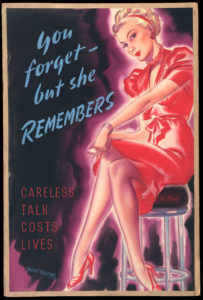
Sabotage. Seduction. Couture dresses with hidden pockets. All were techniques and tools used by female spies recruited by the Office of Strategic Services (OSS) during World War II. These women were critical to Allied success and audiences have been thrilled by their exploits in novels and on the screen, yet their very real accomplishments have been ignored for generations.
This year the OSS, which was the precursor to the CIA, will celebrate its 75th anniversary. And thanks to the OSS Congressional Gold Medal Act, its agents will finally get the recognition they deserve. Just in time for that celebration The Brass Compass, a book set during WWII, will place one female spy in the spotlight.
The novel reveals the extreme dangers agents faced when Lily St. James parachutes behind enemy lines, destroys rail lines, and infiltrates a high-ranking Nazi household. The Brass Compass is the latest story to celebrate the uncompromising intelligence and composure displayed by real operatives. From Greta Garbo in the film “Mata Hari” to Stephanie Meyer’s modern novel The Chemist, audiences are riveted by the tough-and-tender ways women approach espionage. These fictions reflect reality. By allowing women to utilize their natural talents and their specialized training, the OSS preserved freedom worldwide.
The covert intelligence program didn’t exist before December 7, 1941. The surprise attack on Pearl Harbor spurred President Franklin D. Roosevelt to create one overarching espionage office, formalizing it on June 13, 1942. Scrambling to cobble together an effective system, the OSS recruited without prejudice. Race, religion, gender, or formal education had no impact on ability. Often the people who became field agents were bilingual. They might have spent time living abroad, which gave them a natural familiarity with overseas cultures. That’s how Lily St. James, the heroine of The Brass Compass, becomes an Allied spy. With a diplomat for a father, Lily grew up in various locations throughout Europe. She is therefore fluent in French and German, both of which are invaluable for an operative.
According to CIA historian Linda McCarthy, the war department knew that women excelled at infiltrating enemy networks and organizing resistance movements. Female agents became saboteurs, guerrilla warriors, mapmakers, propagandists, and communications technicians. In The Brass Compass, St. James calls on her training as well as her wits to fulfill a number of these roles. Like many of the agents who parachuted behind enemy lines in France, her life expectancy in the field is about six weeks.
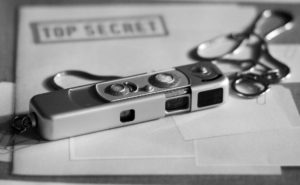
Fortunately, OSS spies had a specially designed arsenal. They used single-shot Liberator pistols, button compasses, and escape maps printed on silk. Espionage equipment tailored for female spies included shoes with hollow heel compartments, codes embedded in compact mirrors, and suicide pills disguised in jewelry. St. James makes use of false documents, hidden compartments and a tiny matchbox style camera invented by the OSS. Even with this specialized equipment, she must be clever. While working as a nanny for a German officer, the tiniest slip might prove fatal. Eventually she is forced to flee with mini-film hidden in a hollow boot heel. Although exposure and fatigue cloud her judgement, she does what she must to survive, and when she stumbles across a dead pilot, St. James takes his Victory Colt pistol and the photo of his lover.
The pistol is a deadly weapon she will not hesitate to use. But she prefers flirtation and persuasion to wiggle out of tough spots, so the photo supports the story she concocts to evade enemy patrols. Seduction and evasion were used by “swallows,” female operatives who were astonishing effective. Betty Pack infiltrated the Vichy Embassy in Washington, DC, through seduction. There she secured the information needed for Operation Torch, the invasion of Vichy French North Africa.
Even though the women of the OSS performed admirably, they struggled against a society that didn’t offer much respect. Doris Bohrer, who analyzed aerial photos and selected troop drop sites, said, “Everyone else was Lieutenant So-and-So, or Captain This. We were The Girls.” Despite the lack of respect, the women of the OSS persevered. Nowadays, female operatives are widely valued. Tamir Pardo, head of Israel’s Mossad, said, “[W]omen’s abilities are superior to men in terms of understanding the territory, reading situations, [and] spatial awareness.” Lindsey Moran, a five-year CIA veteran, believes that the agency’s best-kept secret is that their most talented spies are women. Awareness and assessment are key to survival, and these skills have been valorized in many films and books like The Brass Compass.
On the 75th anniversary of the OSS, agents who risked their lives in WWII will finally receive the recognition they deserve. The program that spawned the CIA, the Navy Seals and the Special Forces will be lauded for the heroism and valor of its employees-whether they were men or women.
On June 13, 2017, the 75th Anniversary, Ellen Butler will be presenting-A Celebration of the OSS 75th Anniversary ~ Highlighting Women’s Contributions, Weapons, and Training-at the Freedom Museum in Manassas, Virginia.
Ellen Butler is an award-winning author whose grandfather was a WWII cryptographer. She is also a member of The OSS Society. The Brass Compass was inspired by the brave women who served in the OSS, the British Special Operations Executive organization, and the French Resistance. Butler will tour multiple states from April through July to present The Brass Compass and other books to readers.
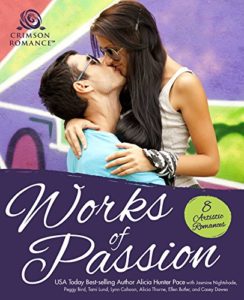
For a limited time Heart of Design and Art of Affection are available as part of a box set. Only .99c will get you some steamy romance stories from Crimson Romance. Don’t miss out on your box set.
We’ve packed this bundle full of mountains, beaches, Hollywood glamour, sunshine, and wine, delivering romance the way only California can. Join these ten couples as they explore love in the state known for its golden dreams.
A picture paints a thousand emotions in these eight tales of colorful romance. Don’t miss a stroke of these wonderful stories of inspiration and passion.